

What the labels on our menu mean
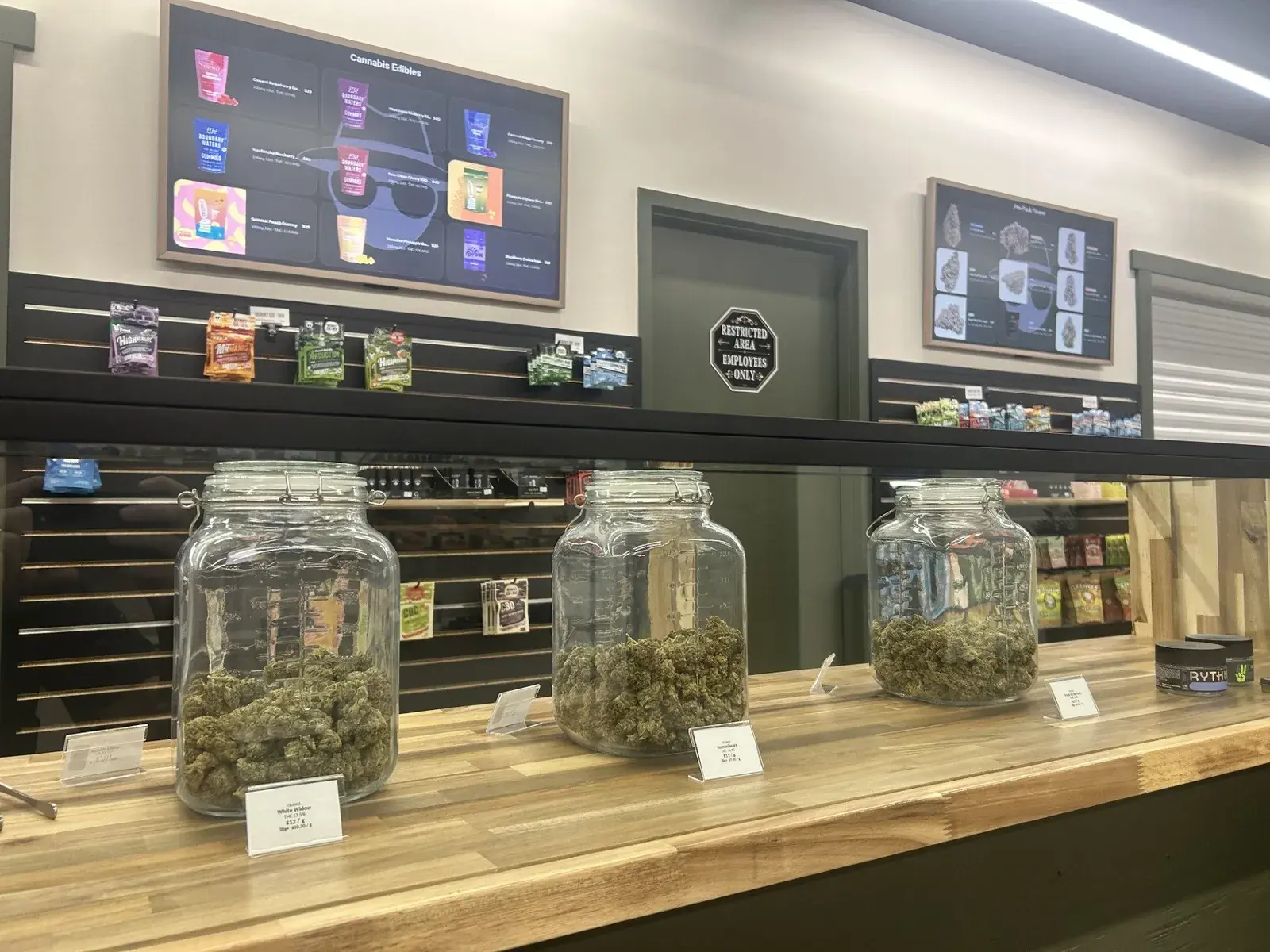
Every strain on our menu is marked Sativa, Sativa-dominant, Hybrid, Indica-dominant, or Indica to show its lineage. We keep the labels because they're familiar shorthand. They describe the plant and its aroma and flavor, not what it will do for you.
- “Indica”
- Traditional label for shorter, bushier plants with broad leaflets.
- “Sativa”
- Traditional label for taller, lankier plants with narrow leaflets.
- “Hybrid”
- A cross of both lineages. Most modern strains are hybrids.
The labels mostly track a plant's family tree and how it grows. Researchers who compared them with genetic and lab data found they often don't match (Sawler et al., 2015; Watts et al., 2021; Smith et al., 2022). Strains have been cross-bred for decades. The same name can differ from one grower to the next.
Terpenes are the smell
Terpenes are natural aroma compounds made by many plants, including cannabis. They're a big part of why one strain smells like citrus and another like pine or pepper.
Here's the surprise: THC and CBD on their own have almost no smell. What you're smelling is mostly terpenes. They're made in the tiny resin glands (trichomes) on the flower, and the same ones show up across nature: limonene in citrus peel, pinene in pine needles, linalool in lavender (Booth et al., 2020).
We keep terpene talk to aroma and flavor. It isn't health advice, and we don't make promises about what any terpene does.
Common terpenes, by smell
The most common in cannabis are myrcene, beta-caryophyllene, limonene, terpinolene, pinene, linalool, and humulene. Here's how each one smells, plus a few more, and where else they show up in nature.
| Terpene | Aroma notes | Also in |
|---|---|---|
| Myrcene | Earthy, musky, ripe fruit | hops, mango, lemongrass, thyme |
| Beta-caryophyllene | Peppery, spicy, woody | black pepper, cloves, cinnamon |
| Limonene | Bright citrus | lemon, orange, and grapefruit peel |
| Terpinolene | Fresh, piney, herbal, floral | tea tree, nutmeg, apples, lilac |
| Alpha- & beta-pinene | Pine, fresh forest | pine needles, rosemary, basil, dill |
| Linalool | Floral, lavender, light spice | lavender, coriander, birch |
| Humulene | Woody, earthy, hoppy | hops, sage, ginseng |
| Ocimene | Sweet, herbal, woody | basil, mint, parsley, orchids |
| Nerolidol | Woody, floral, fresh bark | jasmine, tea tree, neroli |
| Bisabolol | Soft floral, delicate sweet | chamomile, candeia tree |
Table sources: Booth et al., 2017; Booth et al., 2020.
How much is in the flower
Usually about 1% to 3% of the flower's dry weight. Published studies of cured flower range from roughly 0.5% up to about 3–4%.
- 72 commercial medical cannabis flower samples: 0.6% to 3.3% total terpenoids by dry weight (Richins et al., 2018).
- Flower of three chemovars: 1.28% to 2.14% (Jin et al., 2020), which notes up to about 4% reported in unfertilized flowers in earlier work.
- Mature flowers of five cultivars: 9.3 to 13.6 mg/g, or about 0.9% to 1.4% (Booth et al., 2020).
Terpenes evaporate, so numbers depend on how the flower was grown, dried, stored, and tested. A lab label showing total terpenes is a snapshot of that batch.
At home, heat, light, and air wear down aroma over time. Keep flower airtight, cool, and dark. We sell small two-way humidity packs, too. See accessories.
How to use it at the counter
Check the top terpenes
The menu lists THC numbers and, when the lab reports them, the top terpenes. Start there.
Smell the flower
Notice what you like. Plenty of people find they have favorite aromas, and that's a good way to find products you like.
Keep notes
Write down the format, the batch, the aroma, and how it felt. It makes the next visit easier.
Ask about the batch
Ask a budtender about a specific batch. We'd rather slow down than guess.
Comparing strength? Look at total THC on the label. A higher number means stronger, not better. Aroma, terpenes, and your own experience matter just as much.
New, or coming back after a while? Start with less. Effects vary by person and product. Everyone's different.
Terpene questions
Does indica or sativa tell me how a strain will feel?
Not reliably. Those labels mostly describe a plant's family tree and how it grows, and studies found they often don't line up with genetic and lab data. For a better read, look at total THC and CBD on the label, the top terpenes, the format, and your own notes on batches you liked. There's more in indica, sativa, hybrid: what matters.
Do terpenes change how cannabis feels?
We don't make promises about that. We talk about terpenes for aroma and flavor. Everyone's different, so start small and ask a budtender about the batch.
Is every strain's terpene profile on the menu?
Not always. The menu shows the top terpenes when the lab reports them. When it doesn't, ask a budtender, and trust your nose.
General education, not medical advice. The full terpene section, with every source, is in our FAQ. For labels and testing, see Cannabis 101. Ready to shop? Start with flower, by the gram or pre-packed.